act by praying … pray by acting

Memorial of Saints Timothy and Titus, Bishops
Lectionary: 520/317

2 Timothy 1:1-8 
Psalm 96:1-10
Mark 3:22-30

Many, many years ago, I was sitting in a high school classroom and delighted to learn that instead of religion class, we’d be watching a movie. Awesome! I thought. No lecture, no class participation, no big deal.

Fifty-six minutes later, my life was changed forever.

The movie was no movie. It was the documentary film Roses in December: The Story of Jean Donovan (1980) and it tells the story of Catholic lay woman Jean Donovan, Maryknoll Sisters Maura Clarke, MM, and Ita Ford, MM, and Ursuline Sister Dorothy Kazel, OSU. These four women were murdered in El Salvador for  working with the poor by government-sanctioned military extremists whose motto was «Haz patria, mata un cura» – “Be a patriot, kill a priest.” And not just priests. Anyone who sided with the poor.

I left that classroom stunned … and with a single question in my heart: for what would I be willing to give my life – and my death?

While today is not the memorial of these 4 Churchwomen (December 2), I can’t help but be reminded of them as we reflect today on two more holy people – Timothy and Titus – who also shaped the life of the Church. We have little time to review their biographies – not because no one likes long homilies – but because we are in a state of crisis. Here and now, we need both the Word and the Table to nourish us as we are called to act by praying and pray by acting.

Timothy, Titus, Jean, Maura, Ita and Dorothy – they stand right alongside the leaders of today who embody the gospel – leaders such as Episcopal Bishop Rob Hirshfeld. In a reflection on January 9 at a vigil for Renee Good in Concord, New Hampshire, Bishop Hirshfeld noted that “the message of Jesus’ love, compassion, and commitment to the poor, the outcast” was comprised when the church became linked to the empire by Constantine in the 4th century. (source)

He says, “And we have lost that voice, and we are now, I believe, entering a time, a new era of martyrdom.” He cites the 4 Churchwomen as well as Oscar Romero who during mass “called upon the death squads of El Salvador to lay down their arms or risk excommunication”. He “was martyred the next Sunday at the altar.”

Hirshfeld goes on:

I have told the clergy of the Episcopal Diocese of New Hampshire that we may be entering into that same witness. And I’ve asked them to get their affairs in order—to make sure they have their wills written, because it may be that now is no longer the time for statements, but for us with our bodies to stand between the powers of this world and the most vulnerable.

And it may mean that we are going to have to act in a new way that we have never seen perhaps in our lifetime, except for these remote stories that I’ve just cited, to put our faith in the God of life, of resurrection, of a love that is stronger than death itself.

For what would I be willing to give my life – and my death?

Our response to this question, and to these witnesses of yesterday and today, will be expressed in a myriad of ways. Some are called to the streets of Minneapolis, Chicago, Portland and perhaps, one day, to our own hometown. Some are called to respond through the spaciousness of their contemplative heart. Some are called to be awake to the pain of broken relationships and broken trust. Some are called to create art and beauty in the face of desperation.  

Stop. Listen. You will hear the call, and you will know how to respond.

Hear these words again from 2 Timothy 1:6-8.

I remind you to stir into flame
the gift of God that you have …
For God did not give us a spirit of cowardice
but rather of power and love and self-control.
So do not be ashamed of your testimony to our Lord …
but bear your share .. for the Gospel
with the strength that comes from God.

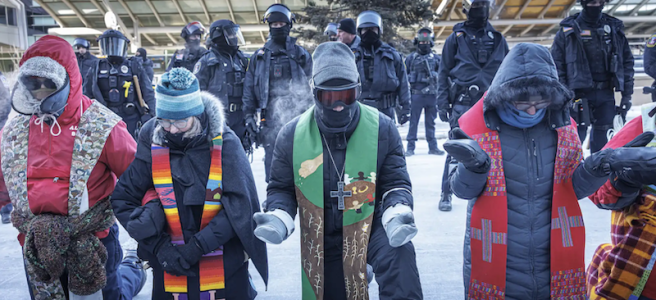
image : Photo by Kerem Yücel | MPR News

“Clergy members and community activists protest Friday in extreme subzero weather at Minneapolis-St. Paul International Airport, calling on Delta Air Lines, Signature Aviation and other companies to stop cooperating with the federal immigration enforcement surge. Police from multiple agencies detained protesters during the action.” (source)


“Advent, take me away!” ummmm … yeah, no.

photo of muddy water splashing by Dmytro Bukhantsov entitled "Mud Improvisation: "The Accidental Artist" in Ukraine, Chernihiv region (2020)

Monday of the First Week of Advent
Lectionary: 175

Isaiah 4:2-6 
Psalm 122:1-9
Matthew 8:5-11

The season of Advent brings the beginning of a new Church year, and it also brings a palpable shift in the tone and cadence of our lectionary readings.

The last readings of the before Advent were rather epic, apocalyptically speaking. The prophet Daniel spoke of an anguished spirit, of visions of terrifying beasts—the greatest of which “devouring and crushing with its iron teeth and bronze claws” and “trampling with its feet” everything within its reach. (Daniel 7:19) In the gospel that follows, Jesus seems to confirm Daniel’s visions with strict warnings that people stay vigilant, lest they too find themselves on the receiving end of such tribulation.

Literally overnight, the church shifts into poetic, almost lyrical language. Just hearing the word “Advent”, seems to generate a little more pep in our liturgical step. And so today we can proclaim with the psalmist, “Come! Let us go rejoicing to the house of the Lord!” (Psalm 122)

I don’t know about you, but my personal disposition doesn’t always match up with the liturgical seasons. Sometimes I’m still in Good Friday well after Pentecost!

As I enter the Advent season, I find myself tentative, wondering if I’m stuck forever in Ordinary Time dealing with the vissitudes of everyday life as well as the endless litany of  metaphorical beasts. I flinch a little bit as I enter the readings, my loins girded, ready to fight the good fight.

Unfortunately, Isaiah does not disappoint me. In the first reading, the prophet serves up – shall we say – an “interesting” metaphor of menstruation. He says:

The Lord shall wash away
the filth of the daughters of Zion,
and purge Jerusalem’s blood from her midst
with a blast of searing judgment … (Isaiah 4:4)

[Note: I leave this for Isaiah to mansplain at another time.] But really, “blasts of searing judgement”? This is not what I expect from Advent. I do not want to be lectured about filth and blood; I want to be transported to into a new space.

Yet perhaps this start to the First Monday of Advent is indeed apropos. Advent is not a promised escape from stress like the classic catchphrase, “Calgon, take me away!” Advent is a happening within the very midst of our everyday lives. God enters into the fray with us and, as Isaiah does eventually say, God provides us with “shelter and protection: shade from the parching heat of day, refuge and cover from storm and rain” – even on the heaviest of days.

I have the sense that the Centurion of today’s Gospel understands the truth of Advent far better than I do. It would have been nice if he could have had a retreat day or week, some time off to go and find Jesus and sit at his feet, resting in the peace and healing of this “guru”. But he knows that’s not going to happen anytime soon. He is in Ordinary Time and doesn’t even have a moment for a smoke break from his command post in Capernaum. He doesn’t have the opportunity to attend a miraculous wedding feast or a life-changing event at the River Jordan. What he longs for, he cannot go to, he cannot reach out and grasp; that is, he cannot make his servant well.

What happens? We know that the Centurion does not leave to find Jesus. In fact, Jesus himself shows up in Capernaum. The very one who can heal and give life, shows up in the midst of the filth and blood, the ordinary and rough stuff of everyday life.

The Centurion wastes no time, for time is not a luxury that he has.  

“Lord, I am not worthy to have you enter under my roof;
only say the word and my servant will be healed.” (Matthew 8:8)

In other words, it’s like the Centurion is saying, “Look, Jesus. Let’s be real. Things are a mess right now. I need you, and I’m stoked that you were willing to come out and meet me where I am. It’s not pretty, but it’s where I am. I know who you are, and I have faith in you. You have a power that moves mountains and heals the sick and broken-hearted. I need for you to do that for someone I care about who needs you. Only say the word …

We can learn a lot from this person of such integrity and faith. Advent is not a time to checkout and “leave the world”. True, we always need to retreat every so often. But the Season of Advent is not a month-long pass to abscond ourselves from our own humanity – with all its filth and blood right alongside near occasions of grace and healing and wisdom and mystery.

Isaiah implores us to look around us for that smoking cloud by day or a light of flaming fire by night. Look, he says, to the ordinary things of life – which for us might be a cloudy day, or a cozy blanket at night – whatever it is, to trust that you will alight upon a pathway bringing shelter, protection, and refuge.

What are the ordinary things of life that light up before you? that invite you to wonder? that cause your heart to ache? Think on these things, follow them, and see where the Spirit leads during this most holy season of Advent.

image : “Mud Improvisation: ‘The Accidental Artist'” by Dmytro Bukhantsov
Chernihiv region of Ukraine, 2020

hildegard of bingen : a guiding light amidst the overwhelm

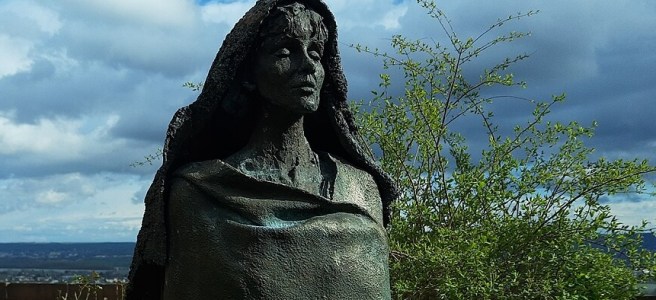
Hildegard of Bingen, bronze sculpture by Karlheinz Oswald outside Eibingen Abbey; photo by Gerda Arendt

Wednesday of the Twenty-fourth Week in Ordinary Time
Lectionary: 445

1 Timothy 3:14-16
Psalm 111:1-2,3-4,5-6
Luke 7:31-35

Our readings today feel to me like a mirror of the world we live in.

“Undeniably great is the mystery of faith,” writes Paul to Timothy and the Christian community of Ephesus which was struggling in a storm of false teachings. “God will forever be mindful of God’s covenant.” “How great are the works of the Lord” the Psalmist reminds us. And then we sing “Alleluia” only to hear the Luke proclaim in the gospel how “the world” can be like a discontent, spoiled person who refuses to see the goodness all around them.

I feel this, deep in my bones. A world of false teachings. Struggle with what seems like bad news followed by even more bad news.

Yet all around us is the glory of God.
… unkept, unspoiled, undeniable.

But unbearable is the weight of trauma. So unbearable that we can’t hear the Alleluia. We can’t remember the covenant. We can’t find the stunning mystery of the Holy One in our midst.

I don’t have the words to make sense of this. And when I find myself at a loss, I try to use whatever ounce of energy I have left to turn to one of my guiding lights.

Sometimes it’s a friend, sometimes it’s a favorite poet. Lately, I’ve turned to the stones themselves, ones I’ve collected here and there. I ask them to tell me how it’s survived millions of years — being upchucked by a volcanic eruption, tossed onto the land, and then having to stand witness as species come and go, storms come and go. … Yet still the stones remain, one right here in the palm of my hand.

And so today, with you, I turn to one of our guiding lights, Hildegard of Bingen.

We turn to her, seeking wisdom, consolation … and perhaps even reprieve from the chaos that surrounds us and threatens to erupt inside the tumultuous earth within our hearts.

She reminds us that even in the cacophony of chaos, we are not alone. God has not forgotten God’s covenant:

Every element has a sound, an original sound from the order of God; all those sounds unite like the harmony from harps and zithers.

She reminds us who we are … and whose we are:

I am the fiery life of the essence of God; I am the flame above the beauty in the fields; I shine in the waters; I burn in the sun, the moon, and the stars. And with the airy wind, I quicken all things vitally by an unseen, all-sustaining life. (Book of Divine Works)

My dear friends, when the chaos threatens to overwhelm us, let us stop and remember this.

Humanity, take a good look at yourself.  Inside, you’ve got heaven and earth, and all of creation.  You’re a world – everything is hidden in you.”  (Causes and Cures)

We ARE the fiery life of the essence of God
We are the flame above the beauty in the fields
We shine in the waters
We burn in the sun, the moon, and the stars
And with the airy wind, we quicken all things vitally by an unseen, all-sustaining life

hollowed and hallowed

a black and white photograph of a hollowed out bowl

I am beyond delighted and honored to have received the third place award for Best Writing – Analysis from the Catholic Media Association for my article “Hollowed and Hallowed: Vocation Minister as Leader into the Future” in Horizon: Journal of the National Religious Vocation Conference 49:3 (Summer 2024) 18-22.


“Sometimes ministry can leave a person feeling hollowed out.
That experience has potential to create a sacred space in which the Spirit may be alive and at work.”

I am grateful to editor-extraordinaire Carol Schuck-Scheiber and all the folks at NRVC who are leaders in vocations work and who publish phenomenal resources for both discerners and ministers. I have enjoyed many years of collaboration with them and with their partner Patrice J. Tuohy of TrueQuest Communications. Congratulations to them for multiple awards from the Catholic Media Association.

Horizon has graciously given me permission to post my article for you. Enjoy and let me know what you think!

the acts of the apostles continue

Wednesday of the Seventh Week in Ordinary Time
Lectionary: 343

Acts 5:17-26 
Psalm 34:2-3, 4-5, 6-7, 8-9
John 3:16-21

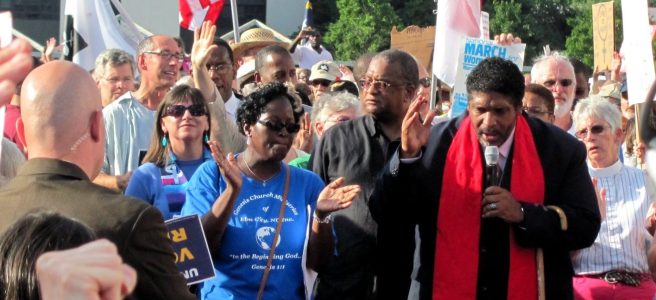
On Monday of this week, Rev. William Barber along with two others were arrested while praying on the steps of the Capitol. Reverend. Barber – a public theologian and co-chair of the Poor People’s Campaign among many other things – he along with those gathered prayed, “We are here crying to you, Oh, God, because we have heard the cries of your people.” (source)

“We have heard the cries of your people” and for that prayer, for that proclamation of the most basic tenets of the Gospel, they were arrested and threatened with jail. 

I can’t help but think of the Apostles in today’s readings:

“The high priest … filled with jealousy, laid hands upon the Apostles and put them in the public jail.”  (Acts 5:17-18)

The Acts of the Apostles are not stories from a bygone era; they are Acts happening day by day as the People of God stand strong and true, prayerful and passionate, calling for – working for – peace and justice on behalf of the kindom of God.

What a reprieve the Apostles had in that man-made, hate-made structure meant to imprison not just their bodies but their prayers, their words and their actions! The angel of the Lord appears and sets them free. Free not to return quietly to their homes or to exile under the cover of night, but to go back in the light of day to pray, to speak words, and to stand for and with the people of God. They stood in the light of day, ready once again to proclaim, “We have heard the cries of your people”, and to risk imprisonment once again.

But what is the risk of imprisonment, when the risk of the life of the people – especially those who are among the most vulnerable and poor – is constantly under threat? And not just threat, but grave harm and even death?

The Acts of the Apostles in the early Church and the Acts of the Apostles today are not man-made, hate-made. They are the Acts of “Apostolos”, which is Greek for “ones who are sent out”. They are ones who are call for ecclesial and societal transformation in order to build the kindom of God, not the kingdom of men. They call for reform and they also call for a new way of doing things that is meant for all creation, including those who seek to imprison them. 

They are people who have heard the words “God so loved the world” and wept. They know, beyond the shadow of a doubt, that God sent God’s own Beloved into the world – not to condemn the world – but that the world might be saved. (John 3:16)

Saved by love. Not money or power. Saved by love. Not singularity or arrogance. Saved by love. Love stirs within the hearts of the Apostles. And it stirs within you and me. What Acts will you Apostles write today? What small acts of kindness — or resistance — will you proclaim with your lives this day?

.

image : Rev. William Barber speaking at a Moral Monday rally on July 15, 2013 ; photo by Ted Buckner