Wednesday of the Fourteenth Week in Ordinary Time
Lectionary: 385
Genesis 41:55-57; 42:5-7a, 17-24a
Psalm 33:2-3, 10-11, 18-19
Matthew 10:1-7
I’ve always loved the story of Joseph. I wasn’t in it so much for the technicolored robe as I was for how he was able to survive after being nearly killed by his siblings and then sold into slavery. I was amazed that he was able to make a life for himself and eventually become a person of power and influence. It was poetic genius of the writers of Genesis to note that years later, the brothers would find themselves at the mercy of the very one whom they had rejected.
Even listening again to the story now, I feel great satisfaction in Joseph tossing his brothers into the guardhouse and making them think about what they had done. But what has always perplexed me is that upon hearing the brothers discuss what they had done, Joseph turned and wept.
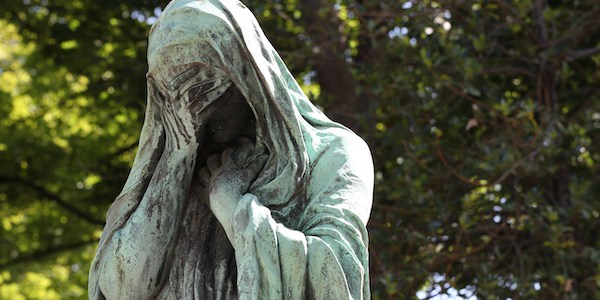
He wept.
I want Joseph to shout and curse them, to throw tables and chairs. But Joseph just turned from them and wept.
This is neither the first nor the last time that Joseph weeps. In fact, throughout the accounting of his life, he has frequent bouts of weeping.[1] At one point, he weeps so loudly that even the Egyptians in the other room can hear him![2] Some have interpreted this weeping as a psychological characteristic of Joseph. He was a tender soul. Passionate and sensitive. That very well may be. But scholars say that’s not the reason for it’s inclusion in Scripture.
Jewish scholar Ariel Seri-Levi notes that there are three main categories for why people weep:
- Mourning for the dead
- Distress directed towards a leader – it might be, for example, a crying out for justice towards the government or towards the divine
- An encounter or reunion between relatives or close friends
Weeping in each of these circumstances communicates something. It shows how a person is in relationship with someone or something.
When Joseph first encounters his brothers begging for food, he doesn’t break down and cry. He is composed and careful about how he will treat them. It isn’t until he hears them discuss what had happened those years ago when they “saw the anguish of his heart when he [had] pleaded” with them.
It is in this moment that Joseph weeps. Going back to Seri-Levi’s categories of weeping – Joseph was not weeping to mourn the dead. Nor was Joseph weeping in distress directed towards a leader. Joseph was weeping because this encounter was not exactly a “reunion” but opened his heart to the possibility that maybe his brothers did actually have a conscience and felt sorrow for what they had done. Seri-Levi says this is one moment for Joseph in a long process of being reunited with his family, and this is why Joseph cries so frequently. For example, when the brothers come back to Egypt and bring Benjamin this time, Joseph once again weeps upon seeing him, but because he is still unwilling to reveal his identity, he does so in secret.
There is much for us to learn in this Genesis reading about the importance of weeping and about the process of healing in our own relationships. But curiously, the church doesn’t pair this reading with a similar gospel reading. It could easily have been Jesus weeping when Lazarus died. No. Instead we get Jesus sending out the 12 apostles.
We get it – Joseph and his brothers are the 12 tribes of Israel in Genesis, and we have the same symbolic 12 in Matthew. That part makes sense.
But perhaps there is something more to reflect on. The story of Joseph and his brothers is a story of love, anguish, violence, wounds, regrets and healing. The same could be said for the 12 apostles. Both sets of 12 were people who were yes leaders, even saints, but who also lived day by day with their own humanity, broken and willful, and in a hostile world.
These are the ones whom God called.
Today, it is you and I who are called. Our messy humanity doesn’t exempt us but rather qualifies us to be sent out to tend to the brokenness in the world. Like Joseph, we may weep frequently. That’s okay. It’s part of healing and moves us ever closer to reunion with others and communion with God. As we go forth in this day, let us remember our own times of weeping – whether in grief, or in protest against injustice, or out of longing for reunion – and talk with God about how this weeping in turn brings the kindom of heaven ever more near.
[1] Ariel Seri-Levi, “Torah Portion of the Week: The Tales Behind the Tears” in Haaretz (December 29, 2016)
[2] Gen 45:2

 julie vieira