Monday after Epiphany
Lectionary: 212
1 John 3:22–4:6
Psalm 2:7bc-8, 10-12a
Matthew 4:12-17,23-25
Possessed. Lunatics. Paralytics.
These three words caught me as I prayed with today’s readings.
Like many of us, I am very sensitive to the use of language and how words can hurt, especially when they are used to dismiss the experience of others.
Matthew was intentional about using these words for he wanted to show that it was the people who were treated as outcasts – demonized, ridiculed, diseased, crazy, and just plain unworthy – that were among the people who not only heard but could take to heart the person and message of Jesus.
It is among the possessed, lunatics and paralytics that Jesus drew close. In Matthew’s account, Jesus doesn’t interview them ahead of time to assess their worthiness or to judge their supposed deviance. He knows what it’s like to be disregarded and pushed out just because of who he is. Jesus makes no moral judgements about the people as a condition of loving them. He just draws close in love and heals them. Jesus pays no heed to the accusations of others about them. Who knows? There could have been legitimate transgressions or concerns and there could also have been trumped up charges, fake news or plain old fear because these people were different from what was considered “normal”. Jesus did not judge. Before him were people whom he would not separate himself from.
Possessed. Lunatics. Paralytics.
Life was rough for them. The minority population always struggles in the majority. It’s hard enough to be different for whatever reason, it’s even harder living in a world that deals harshly with anything and anyone who doesn’t fit. We Christians and religious do our best to follow Jesus in embracing everyone, including those who are different. But sometimes our language and actions bely our own fear of those who are different. They may be subtle microaggressions or fully intentional acts that discriminate and hurt.
What I love about this passage is that Jesus indiscriminately lets the people come to him.
They brought to him all who were sick with various diseases and racked with pain, those who were possessed, lunatics, and paralytics, and he cured them. (Matthew 4:24)
He cured them. He cured them all. And many became his dear friends and followers.
It must have felt nice for persons who had suffered marginalization to find a place where they felt at home, loved, and on a mission they cared about. Maybe they were still using their crutches or had occasional meltdowns or had to struggle to cope with their demons. But they were there. Side by side with Jesus.
It takes me back to our first reading where each of us is address as Beloved. Perhaps this should always be where we begin any encounter with the other. Not the things we fear about them – possessed, lunatics, paralytics – but who they most truly are. Beloved.
.
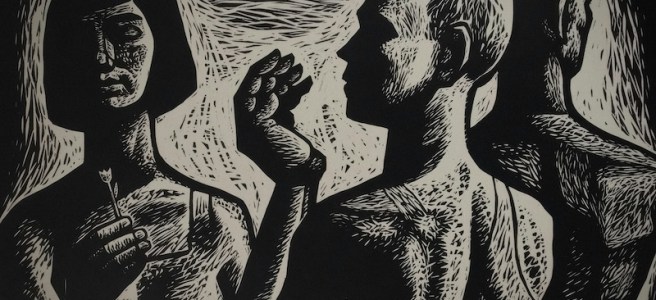
image : “Maa ootab” (The earth is waiting) by Herald Eelma, Estonia 1964

 julie vieira