Seventeenth Sunday in Ordinary Time | IHM Jubilee Eucharistic Celebration | July 27, 2024
Lectionary: 110
2 Kings 4:42-44
Psalm 145:10-11,15-16,17-18
Ephesians 4:1-6
John 6:1-15
Sisters, Brothers and Siblings, Hermanas y Hermanos: ¡Feliz Jubileo! Happy Jubilee!
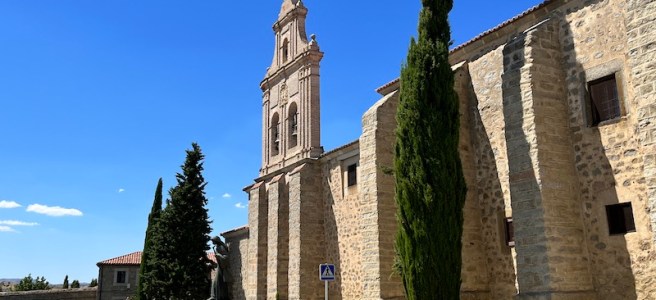
Twenty-five years ago when I entered the IHM congregation as a novice, we stood in this chapel – at this altar – in the presence of the IHM president and community and expressed our desire to commit ourselves to God within the IHM mission. The then-president Virginia Pfau presented each of us a copy of the IHM Constitutions which are our rule of life. It sets out how we will live the liberating mission of God with one another on behalf of the church and world.
As Ginny handed us the Constitutions, she said a word or two. And then she said, “Take and enflesh the Constitutions”.
Enflesh the constitutions?? We were all taken aback. Those were strong words. Not just “read this” or “be inspired by this”, but enflesh the Constitutions. Make real with your very bodies the Constitutions. Make them alive and concrete in your life.
After receiving the Constitutions, we moved into the Eucharistic Rite and were invited, like every Eucharist, to take and become the Body and Blood of Jesus the Christ.
Eat. Drink. Enflesh. Do this in memory of me. Comer. Beber. Encarnar. Hacer esto en memoria de mi.
Today’s readings proclaim this central message of our vocation as Christians. In the gospel, John tells the story of Jesus’ of the multiplication of loaves and fish. It is an awesome event.
But John tells us this story not so much to dazzle us with Jesus’ miraculous feats, but to symbolize what Eucharist means: Jesus the Christ not only sustains us with God’s own life but satisfies us abundantly and overflowingly.
We know the story well. A throng of people follow Jesus, wanting to see more strange and marvel-filled wonders. Jesus, on the other hand, just wanted a quiet, mountain-side retreat with his disciples. But now he’s got a crowd of thousands, and those thousands are hungry. The rest, as they say, is history. One blessing and a few loaves and fish later, and everyone has more than enough to eat with leftovers to boot.
While the miracle is, well, miraculous, there is perhaps an even more important thing that happens in this story. Let’s go back to the beginning for a moment when Jesus realizes that the people are hungry and asks if there is any food. John writes: “Andrew, the brother of Simon Peter, [responds] to Jesus, [saying] ‘There is a [child] here who has five barley loaves and two fish …’” (John 6:9)
Imagine the scene. Thousands upon thousands of people tired, hungry, and perhaps even getting a little disruptive — as any hangry person would know! Among them was a child with his lunch box: five loaves and two fish. John tells us that the loaves were made of barley, hinting that the child was from a poor family for barley bread is the ordinary food of the poor. We know no other details; however, we can imagine that this food likely was the last of what this boy’s family had, with no idea where the next meal might come from.
Still, the child brings his five barley loaves and two fish to one of the apostles. Perhaps he tugs on Andrew’s robe and shyly unwraps the food. People nearby laugh and say how cute the child is for thinking foolishly that the lunch box has enough food to make a dent in the crisis at hand. But all the child knows is that food is needed, and that they have something to share.
It would have been understandable for the child to hide the lunch box and have just enough to feed his family. But instead, the child chooses to give it all away and to risk going hungry. All that child knew to do was to answer the call to, in the prophet Elisha’s words, “give to the people to eat”.
I do not believe that this quiet act of faith was lost on Jesus. For Jesus, too, would give everything he had, his own body and blood for the sake of a world hungering for a deeper life of meaning and connection with God.
As I ponder what it means to be jubilarians – women religious in the IHM Community for 25, 60, 70, 75, and 80 years – I can’t help but think of these women who came to the congregation with whatever gifts, desires, energy, and hopes that they had – a loaf of barley bread here, a fish there. None of us have enough in our lunch box to heal the wounds of the world – to ease suffering, to end racism, to protect the queer community, to heal the earth, to liberate the captive. Yet the call is no different to us as it was to that child some 2000 years ago.
Give to the people to eat. Dar a la gente para comer.
We Jubilarians and indeed all of us gathered here in person and online – of whatever age, gender identity, culture, language, relationship status or spiritual persuasion – every one of us is called to give what we have, to empty our lunch boxes, and to trust that in doing so, something good and beautiful for the world will unfold. Indeed, God honors each of our few loaves and fish, and then goes further and provides for us abundantly, even when the odds are stacked against us.
Our God is a God of Providence, a God who guides us and cares for us in “concrete and immediate ways” in “the least things to the great events of the world and its history”. (Catechism of the Catholic Church §303)
As our foremothers the Oblate Sisters of Providence say, “Providentia providebit”. Providence provides. Years ago, I asked Sister Mary Alice Chineworth, OSP, an Oblate Sister of Providence, what exactly this means. She said,
Providence Spirituality is dependence upon God as Provider of all our needs, including our spiritual welfare.… Whatever we have, we know that it is gift of the spirit, and we must use it wisely and share it generously…. [It] enables us, with total trust in God’s Providence, to bring joy, healing and the liberating redemptive life of the suffering Jesus to the victims of poverty, racism and injustice despite contradictions, prejudice and pain.
Each of us is called to give not only our gifts – a loaf of bread here, a fish there – but our very life for the world – just like the child and their lunch box … just like Jesus and his total gift of self.
Therefore, “I urge you,” as Paul says to the Ephesians, “live in a manner worth of the call you have received, with all humility and gentleness, with patience, bearing with one another through love.” (Ephesians 4:1-2)
Remember this: “take and become the body and blood of Jesus the Christ.”
Eat. Drink. Enflesh. Do this in memory of me. Comer. Beber. Encarnar. Hacer esto en memoria de mi..
.
photo : Dan Iggers on Flickr



 julie vieira